
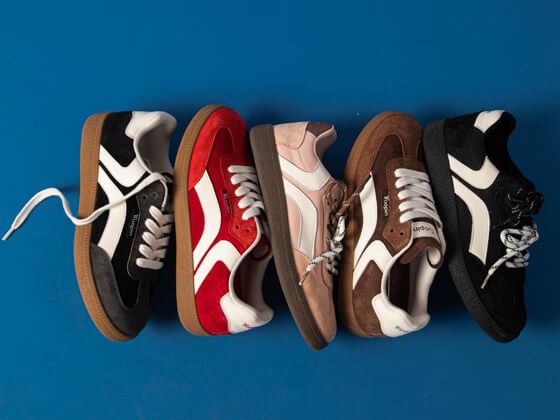
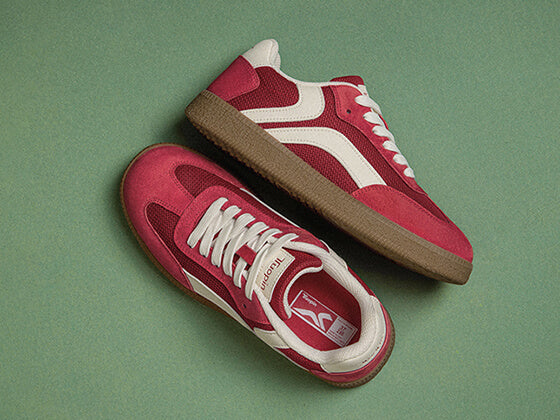
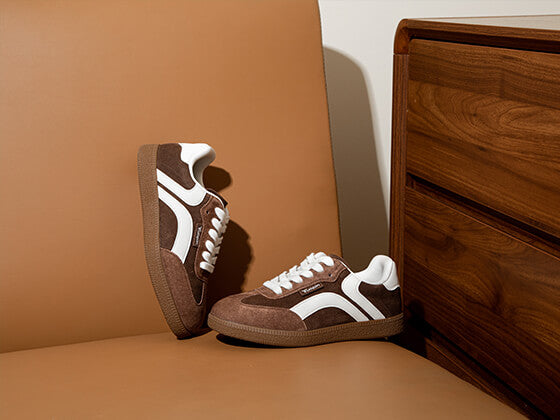




We've always had a soft spot for the pared-back retro sneaker. The low profile, the soft suede toe, the gum sole, the clean lines that go with everything and try too hard at nothing. It's one of those rare designs that's stayed quietly in style for decades, precisely because it never shouts. You don't get tired of it.
But for all that charm, there was always one thing.
The classic version of this shoe was built narrow. It came out of an old world of slim, flat athletic lasts — shapes drawn more for a certain silhouette than for the range of real feet that actually want to wear them. You know the feeling. You put on a pair, love how they look in the mirror, walk out the door, and by mid-afternoon your toes are pressed together and there's a tight band across the widest part of your foot. The shoe looked right. It just never quite felt right.
For a long time, we assumed our feet were the problem.
They weren't. Ask the people who study feet for a living and you'll hear the same thing: most of us who think we have "wide feet" actually have perfectly average feet. We've just spent years in shoes cut too narrow to begin with. The research backs it up — most people are walking around in footwear narrower than their own feet, quietly sizing up, breaking them in, and accepting a little pinch as the price of a good-looking shoe.
There's a simple way to see it for yourself. Trace your bare foot on a sheet of paper, then trace your favorite shoe right over the top. For a lot of people, the foot spills past the line on both sides. That's not a wide foot. That's a narrow shoe.
It only got more interesting the more we looked into it. Feet aren't fixed. They swell a little over the course of a day, and they change shape over the years. The pair that fits at ten in the morning can feel like a different shoe by dinner. Something built to fit only one exact version of your foot was never going to feel good for long.
So we asked a simple question: what if we changed nothing about the look, and fixed the part that pinched?
That's exactly what we did. We kept the silhouette — the same low, clean, unfussy retro shape we fell for in the first place. Then we rebuilt it on a slightly roomier last. A little more width across the ball of the foot. A little more depth through the toes, plus the small bit of room past your longest toe that good shoe fitters have recommended forever. Enough that the shoe quietly disappears on your foot the way a good one should, instead of reminding you it's there.
We want to be clear about what this isn't.
It isn't an orthopedic shoe. It isn't chunky, or corrective, or built around a problem. From the outside, it's the same sneaker you already like the look of — same proportions, same low stance, same easy-with-everything personality. The difference is something you feel at hour ten, not something anyone else can see. And if your feet happen to run narrow, the extra room is easy to take up: lace them a touch tighter and they settle right in.
Somewhere along the way, that became the thing we care about most: shoes shaped around feet, not feet squeezed into shoes. It sounds obvious when you say it out loud. Most of the industry still does it the other way around.
So that's the whole reason our retro sneakers run a little wider than the classics that inspired them. Not to reinvent anything. Just to make a timeless shoe you can actually wear all day — and forget you have on.